Aurora large-format LED display, broadcast quality
Client Statement · ADG-CS-2026-001
Buyer Advisory · Australian Market
The Hidden Cost of
Low-Price LED Imports
Why uncertified Chinese-origin LED systems pose safety, compliance and reliability risks in the Australian market — and what to insist on before you buy.
Document Type
Client Statement
Reference
ADG-CS-2026-001
Market
Australia (AU)
Status
For Circulation
8
Risk categories
identified
5
Specific AS/NZS
non-compliances
13
Due diligence
questions to ask
0
Valid certifications
on inspected imports
At a Glance
The risk you may not see at purchase

A growing number of LED display systems are reaching the Australian market via low-cost supply channels in China. These are not finished, engineered products — they are assemblies of LED modules, generic power supplies and receiver cards bolted into welded steel chassis by unskilled labour. They do not carry the SAA, RCM and EMC certifications required to be sold or installed in Australia, and in our assessment they should not be permitted entry into the country.

Electrical Safety Hazard — Direct Finger Contact with 240 VAC

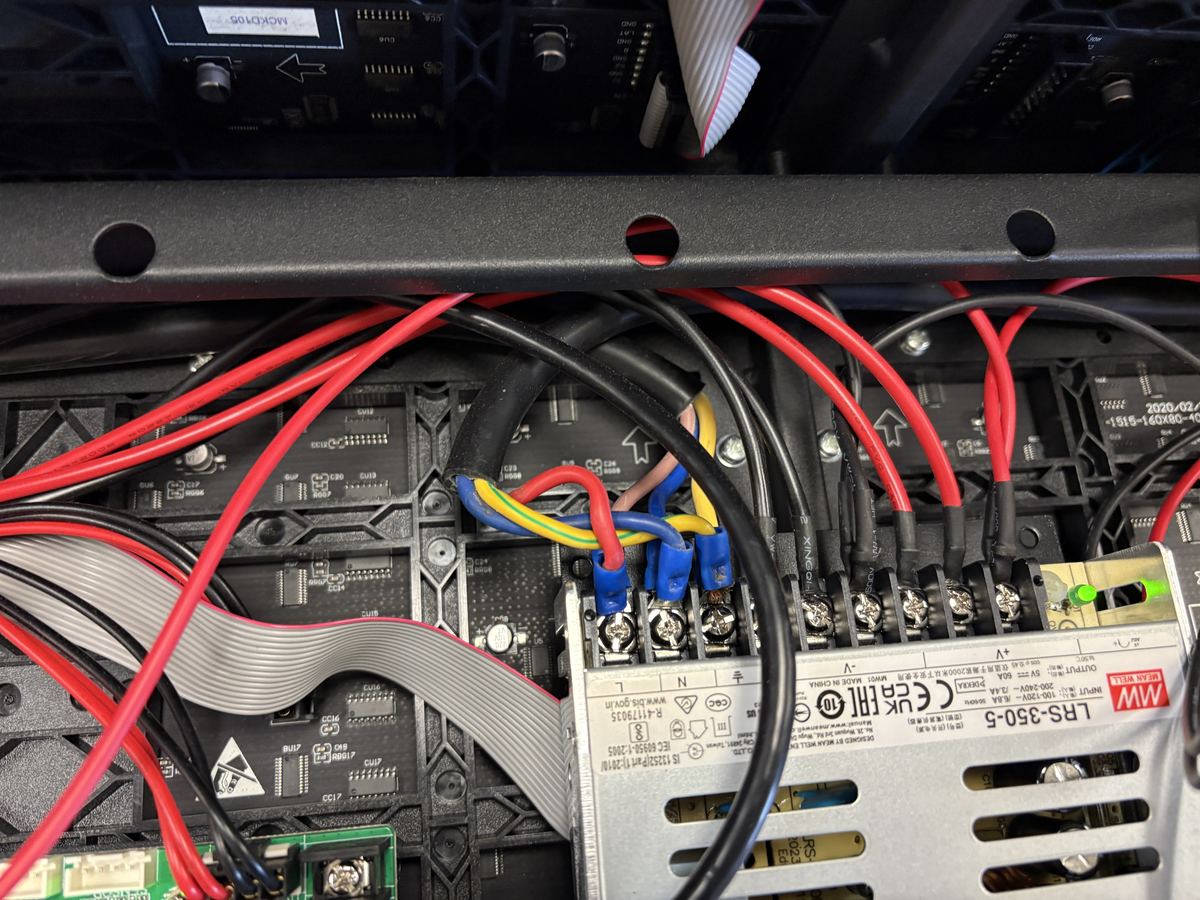
In several inspected products the active, neutral and earth terminals on internal power supplies can be touched directly by a finger or stripped-conductor end through service cavities in the cabinet rear. Earth bonding to the chassis is frequently absent or unverifiable.

⚠️
Illegal to Import, Install or Connect

Without SAA approval, RCM mark and EMC test reports, these products cannot lawfully be imported as electrical equipment, connected to a 240 VAC supply by a licensed electrician, or installed on an Australian site. Sites found to contain non-compliant equipment can be issued an electrical safety notice and ordered to disconnect.

Aurora
Aurora Displays
Aurora Signage Pty Ltd
Buyer Advisory
Risk Summary
Ref: ADG-CS-2026-001
Risk Summary
What we observe — versus Aurora Standard
Eight categories of risk observed across inspected low-cost LED imports, compared against Aurora Displays' standard engineering, compliance and quality requirements.
Risk Area ⚠ What We Observe in Low-Cost Imports ✓ Aurora Standard
Electrical Safety
Mains AC terminals left uncovered and physically accessible inside the cabinet. Active, neutral and earth terminals can be touched directly. Earth bonding frequently absent or unverifiable. Fully shrouded AC terminations, IP-rated cavities, no possibility of finger contact with live conductors, and verified earth bonding to the cabinet chassis.
Power / Data Segregation
Mains AC, DC power and low-voltage signal share the same chassis cavity. DC wiring routinely draped across data ribbons, receiver-card PCB, and open AC terminal block. Physically segregated channels for AC, DC and signal in line with AS/NZS 3000; no cross-cabinet contact between supply and signal cabling.
Compliance
Non-Compliant
No SAA approval, no RCM mark, no EMC test reports. Products are not legally importable as electrical equipment under Australian regulations.
Fully Certified
Full SAA, RCM and EMC certification; documentation supplied with every cabinet.
Cabinet Construction
Welded sheet-steel chassis assembled by unskilled labour. Poor dimensional tolerance; visible seams between cabinets at scale. Precision die-cast aluminium cabinets with tight tolerances; clean seams across large arrays.
Module Protection
Exposed PCB at rear of modules. Vulnerable to airborne moisture, condensation and corrosion — especially in tropical and coastal AU climates. Fully encapsulated or sealed module rear; tested for Australian humidity, salt-spray and dust environments.
Driver IC & Solder Quality
Bargain-grade driver ICs and uncontrolled SMT lines produce vertical line defects (open circuits), stuck-on pixels (driver short circuits), and intermittent faults from poor solder joints. Premium-tier driver ICs (Macroblock, Chipone, etc.), AOI-inspected SMT, and tested data interconnects on every panel.
Interconnects & Cables
Sub-grade cabinet-mounted data connectors; cable assemblies crimped without QA. Entire cabinets drop content while neighbours continue — visible as black or partial cabinets across a live array. Industrial-grade connectors (RJ45 with locking bail or Neutrik etherCON), tested cable assemblies, and redundant data paths where the application warrants.
Workmanship & Traceability
No torque control, no AOI, no quality gates, no per-cabinet traceability. No recall mechanism when faults appear in the field. Engineered assembly line with AOI, per-cabinet QC records and serialised traceability.
Aurora
Aurora Displays
Aurora Signage Pty Ltd
Buyer Advisory
Evidence in the Field
Ref: ADG-CS-2026-001
Evidence in the Field
Failure modes observed on imported product
The following figures illustrate failure modes drawn from inspections of imported low-cost LED products in the Australian and Asian markets. Branding has been redacted where applicable.
Service cavity on rear of imported cabinet — direct access to live 240 VAC terminals
Fig 1 — Finger-Access Cavity
Service cavity with direct access to live 240 VAC terminals
Cabinet chassis side — screw-holes and welded seam visible
Fig 2 — Cabinet-to-Cabinet Seam
Poor tolerances visible across panel-to-panel join
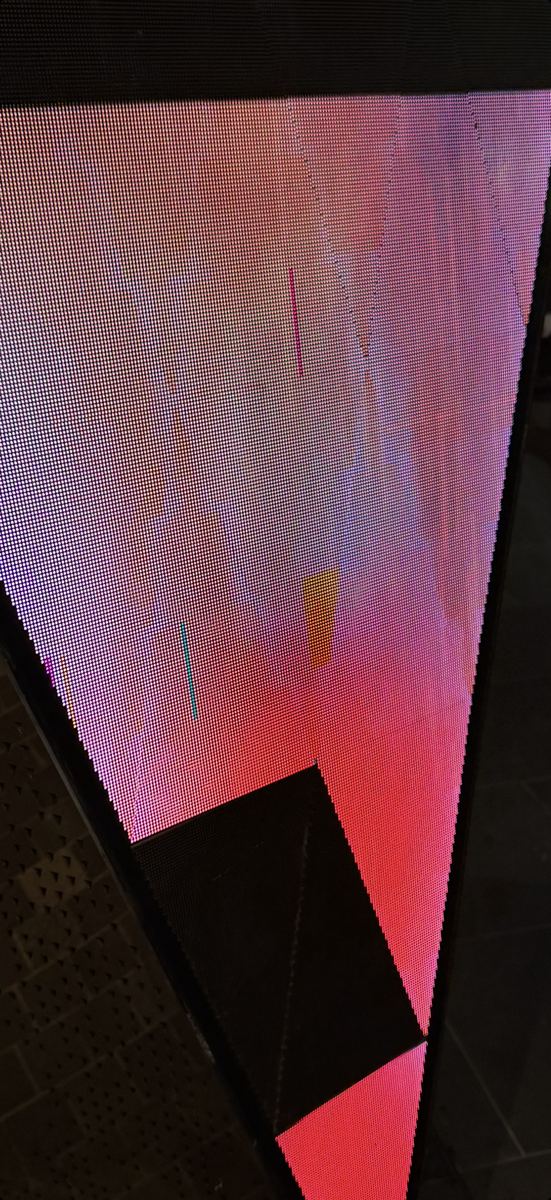
Driver IC faults — magenta and cyan fault lines on live LED panel
Fig 3 — Pixel Faults in Service
Single-channel driver-IC open and short faults
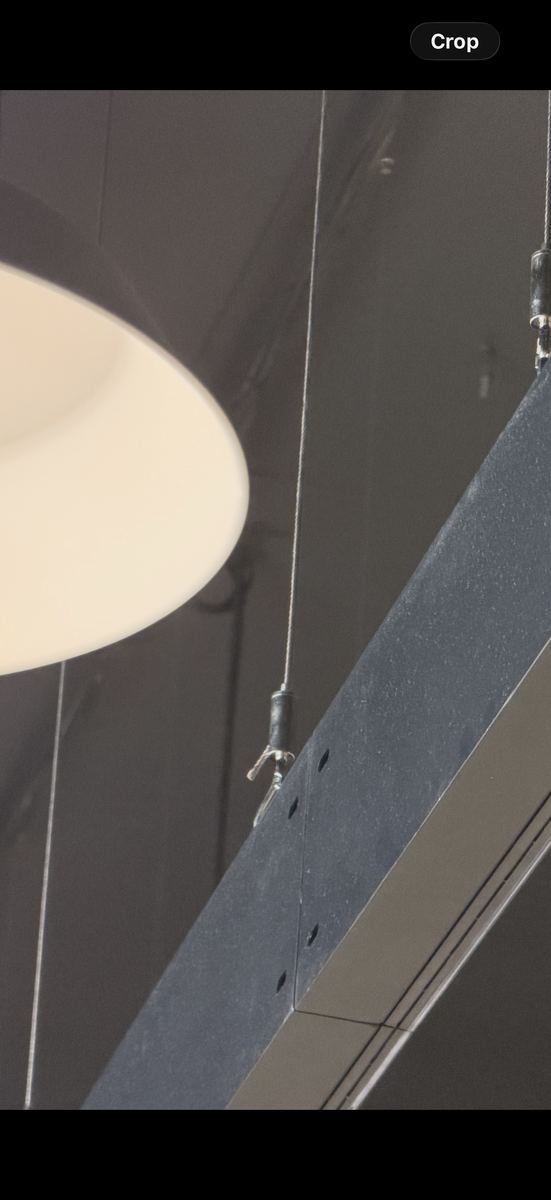
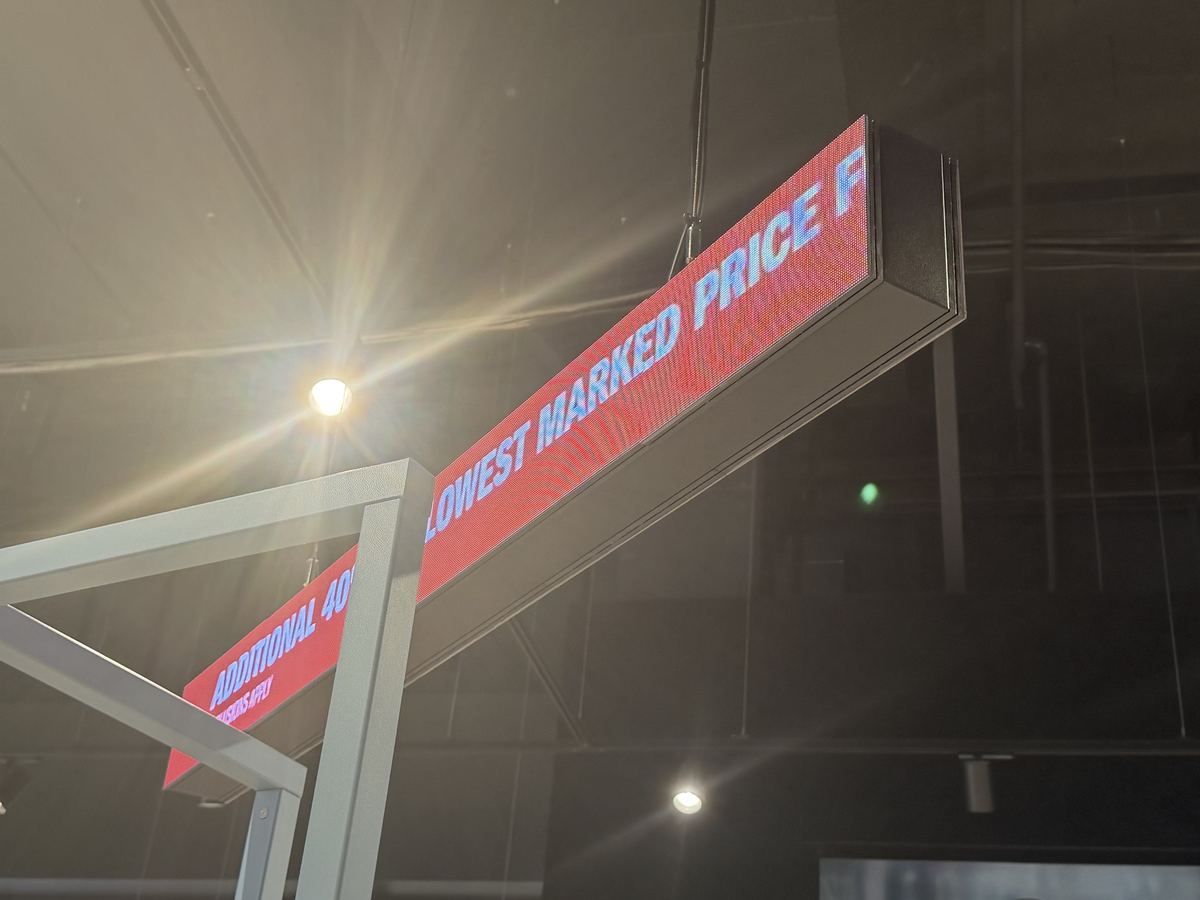
Welded steel-frame LED banner beam suspended from ceiling
Fig 4 — Welded Steel Chassis
Dimensional distortion and seam visibility at operational brightness
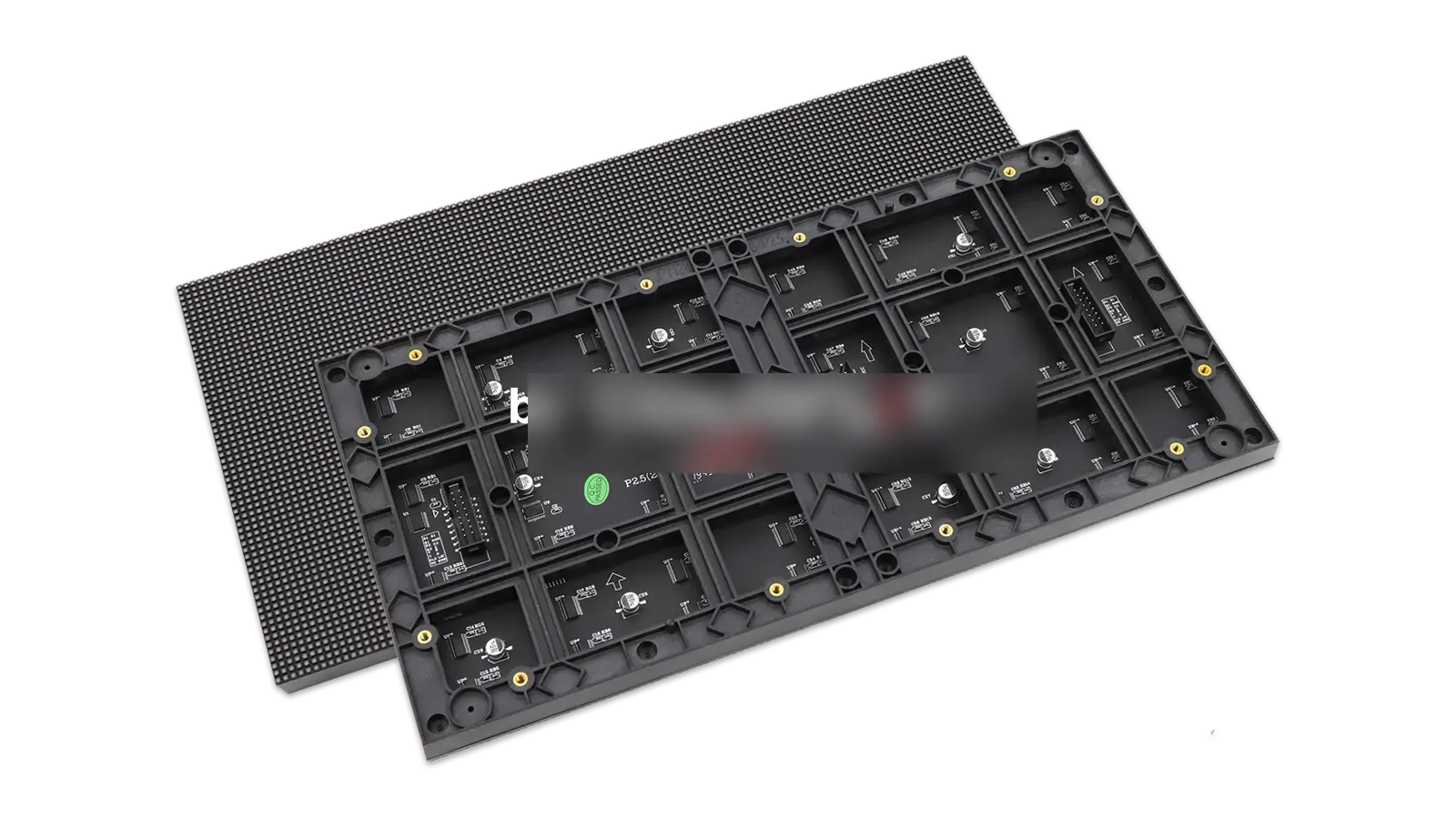
Low-cost LED module rear — exposed PCB, no potting or protection
Fig 5 — Exposed Rear PCB
Unpotted module rear — corrosion risk in AU conditions
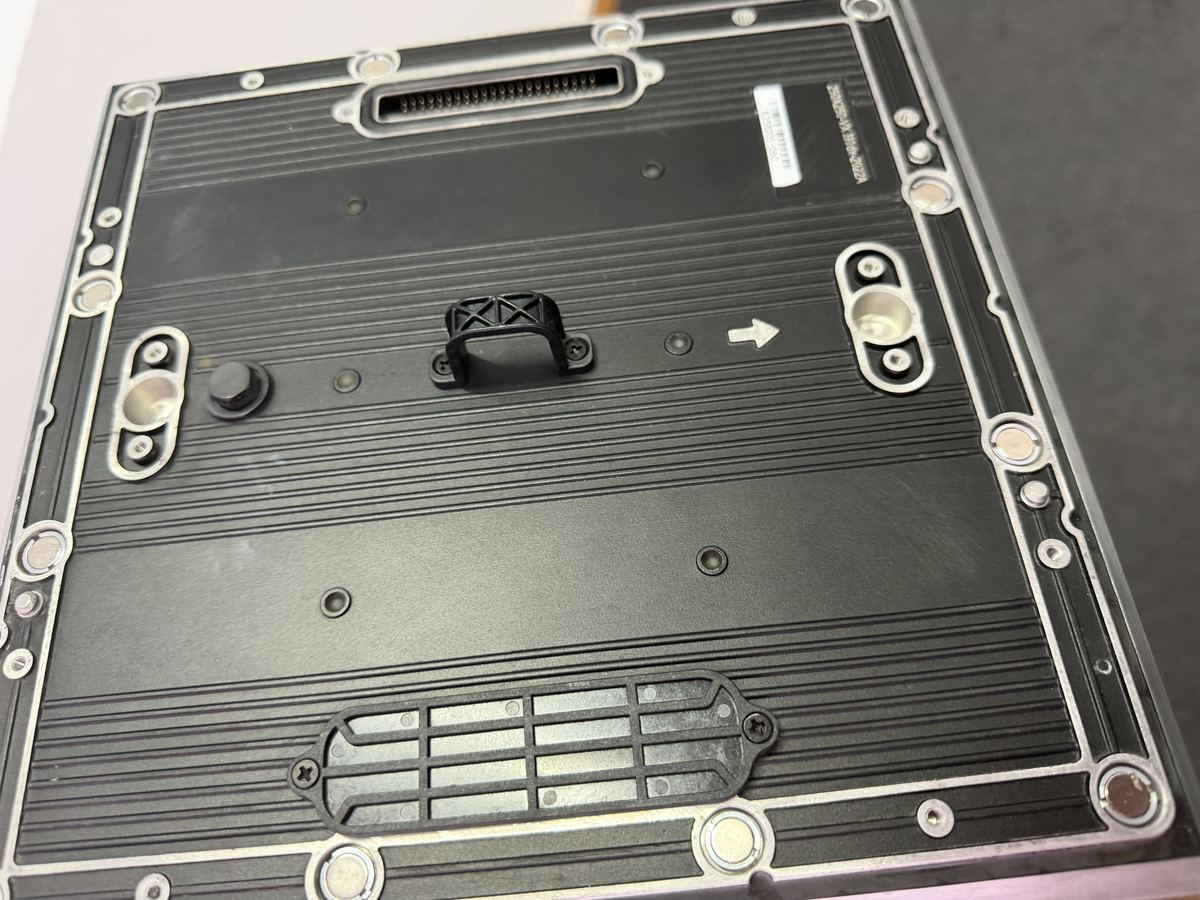
LUX Aurora LUX Range — Construction Quality
The difference is visible before the screen is switched on.

The Aurora LUX module rear shows what engineered construction looks like: precision die-cast aluminium back-pan, fully enclosed wiring cavities, IP-rated connector housings, serialised QC label, and no exposed PCB surface at any point.

Cabinet
Precision die-cast aluminium — no welded steel
Wiring
Fully enclosed — no exposed PCB or live terminals
Connectors
Industrial-grade, IP-rated, locking housings
Traceability
Serialised QC label on every cabinet
Aurora LUX module rear — precision die-cast aluminium construction
Aurora LUX Cabinet
Rear panel — precision die-cast, fully enclosed. Compare with Fig 5 above.
Internal Construction: A Safety Review
Teardown findings — as delivered to site
These photographs were taken during teardown of a representative cabinet sold into the Australian market

They show how the cabinet is actually wired and assembled as delivered to site. The findings are, in our professional opinion, both electrically non-compliant under AS/NZS 3000 and a direct safety hazard to anyone who has to open the cabinet for service.

Mean Well LRS-350 PSU with exposed L/N/E screw terminals — no cover fitted
Fig 9 — Uncovered 240 VAC Terminals
Live screw terminals accessible; manufacturer cover not fitted
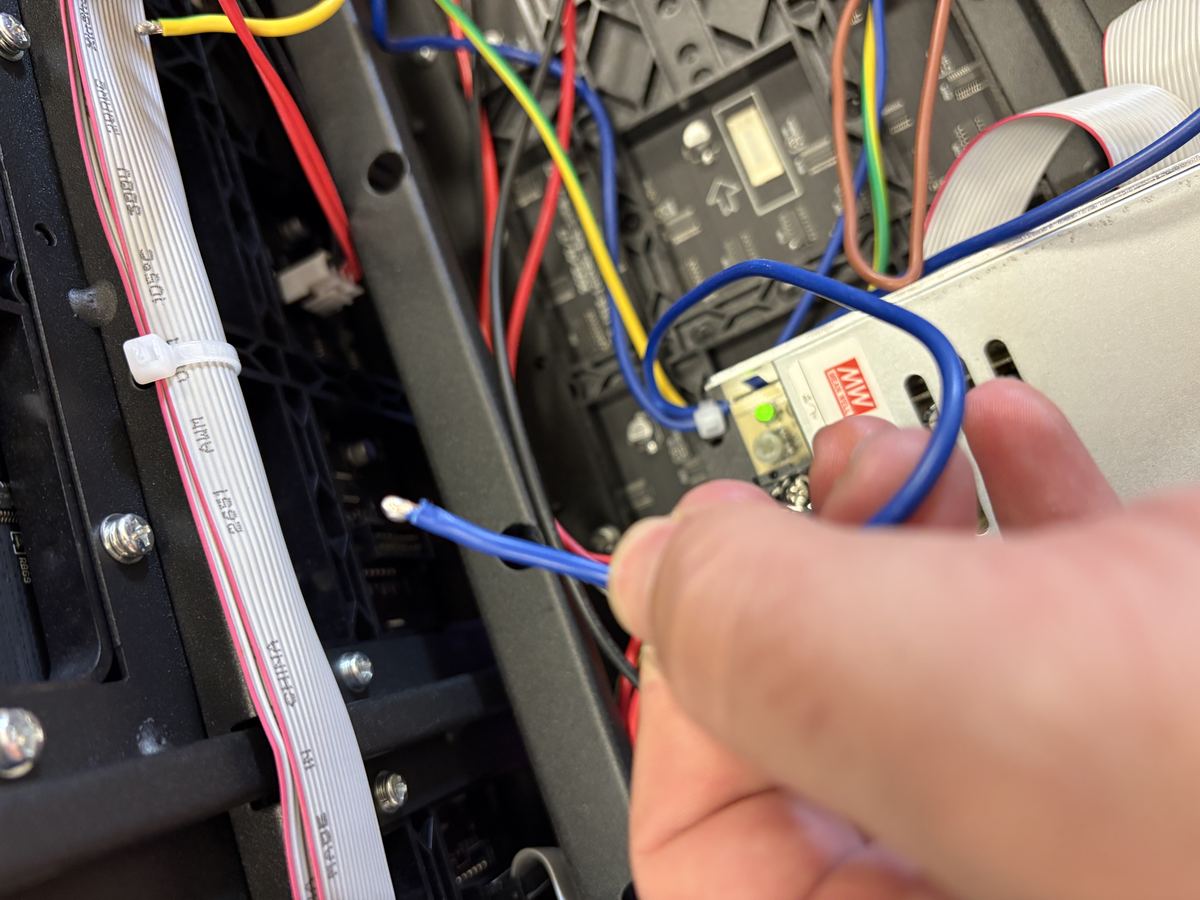
Hand grasping stripped blue mains conductor — green LED on PSU confirms unit is energised
Fig 10 — Accessibility of Live Wiring
Direct hand contact with mains potential — no panel removal required
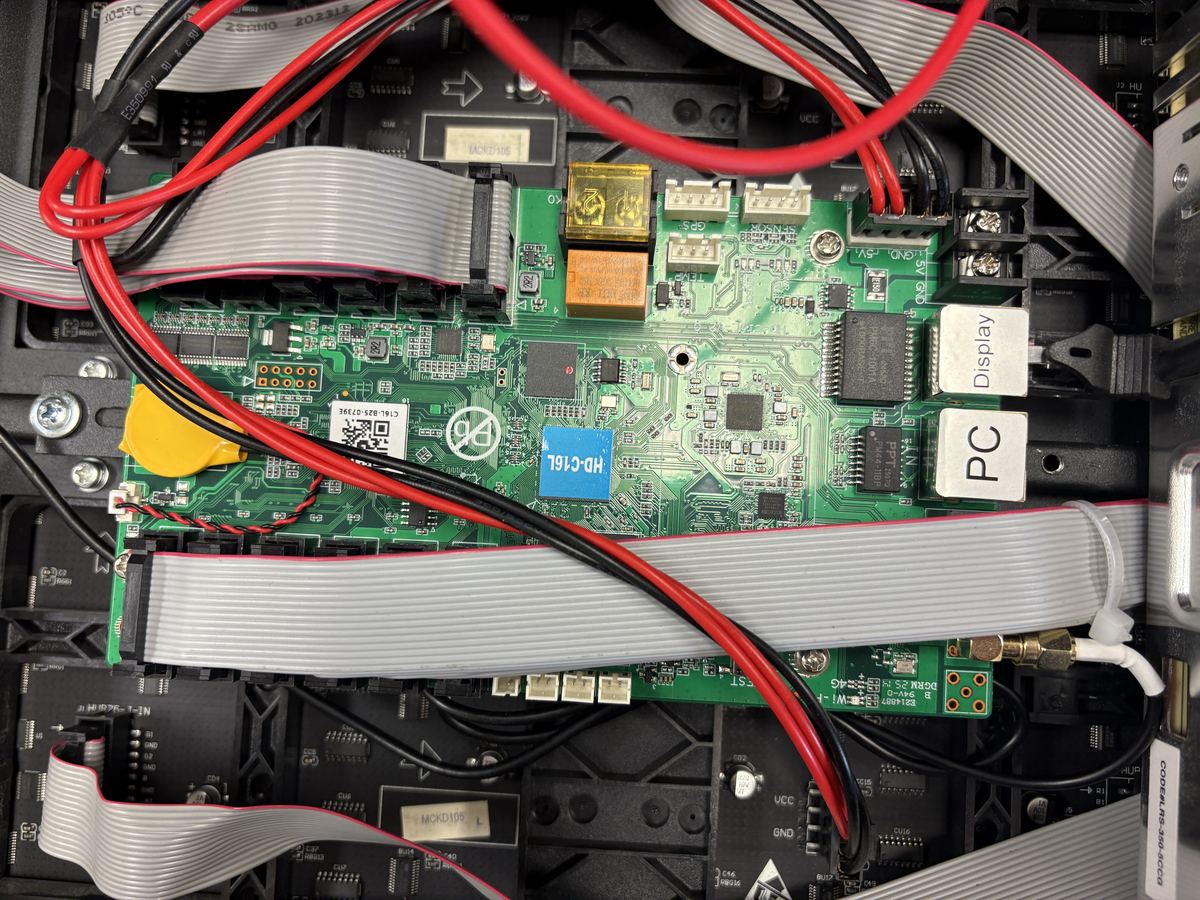
Receiver card PCB with DC power wiring and HUB ribbon data cables sharing the same cavity
Fig 11 — No Power/Data Segregation
AC, DC and signal in single cavity — breaches AS/NZS 3000
Aurora
Aurora Displays
Aurora Signage Pty Ltd
Buyer Advisory
Non-Compliances & Case Study
Ref: ADG-CS-2026-001
Specific Non-Compliances
Statutory breaches observed on inspected product
In its as-supplied condition this product cannot lawfully be connected to a 240 VAC supply by a licensed electrician in Australia.
Ongoing Liability for Site Owners

Site owners who have already accepted equipment of this kind are carrying an undisclosed safety liability. A site found to contain non-compliant equipment can be issued an electrical safety notice and ordered to disconnect immediately.

Case Study
A major Australian airport retail precinct
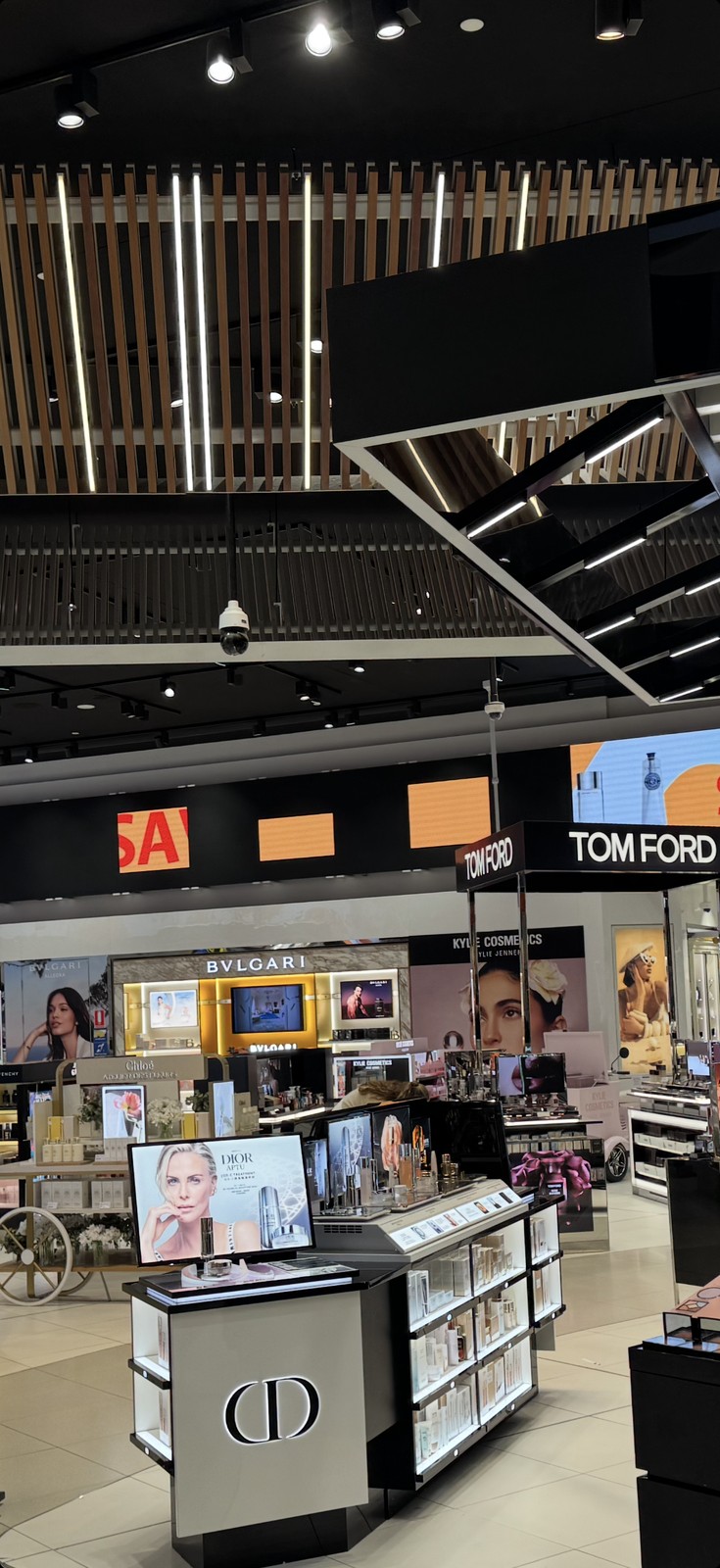
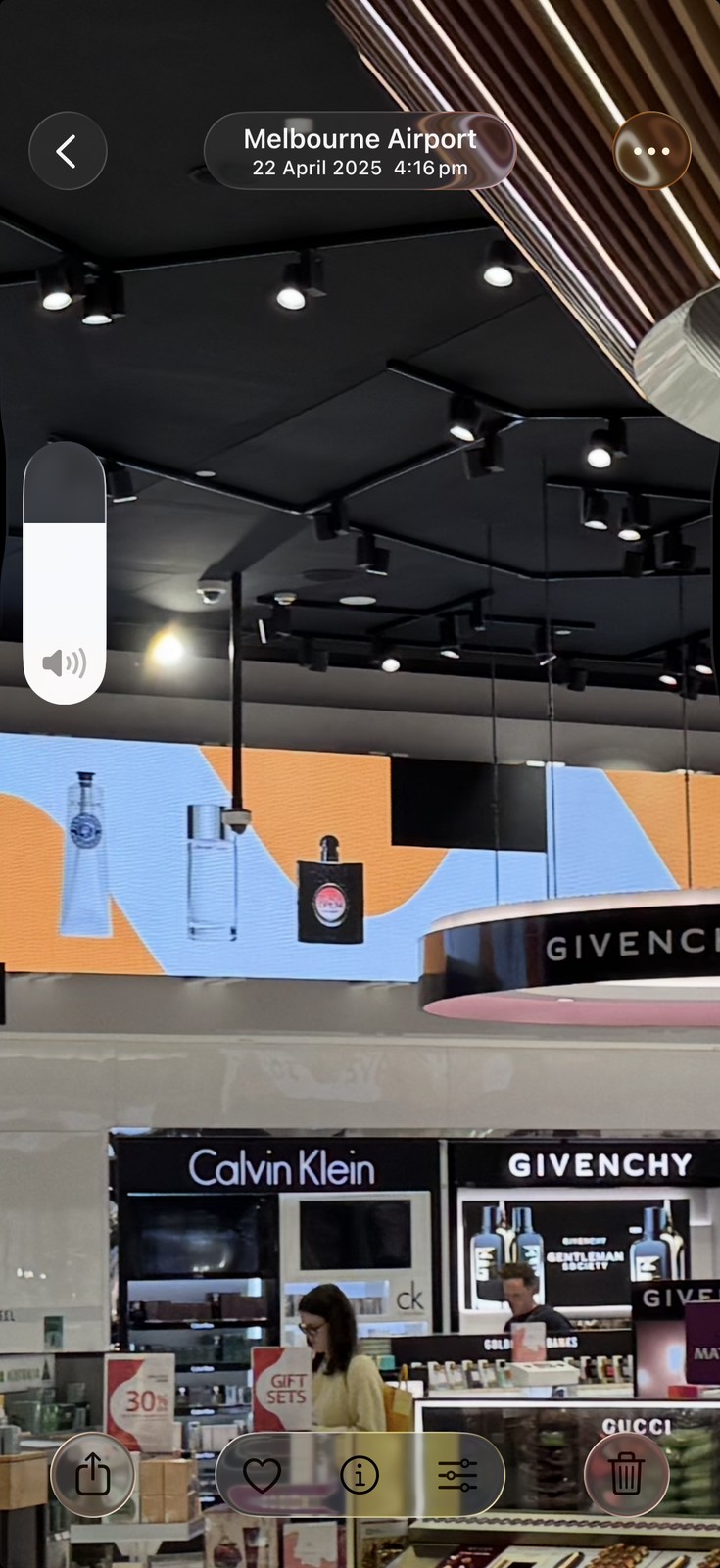
Melbourne Airport duty-free — three blank orange LED cabinets (dropped content) visible across the live ribbon Melbourne Airport LED ribbon — orange dropped cabinet visible beside live content
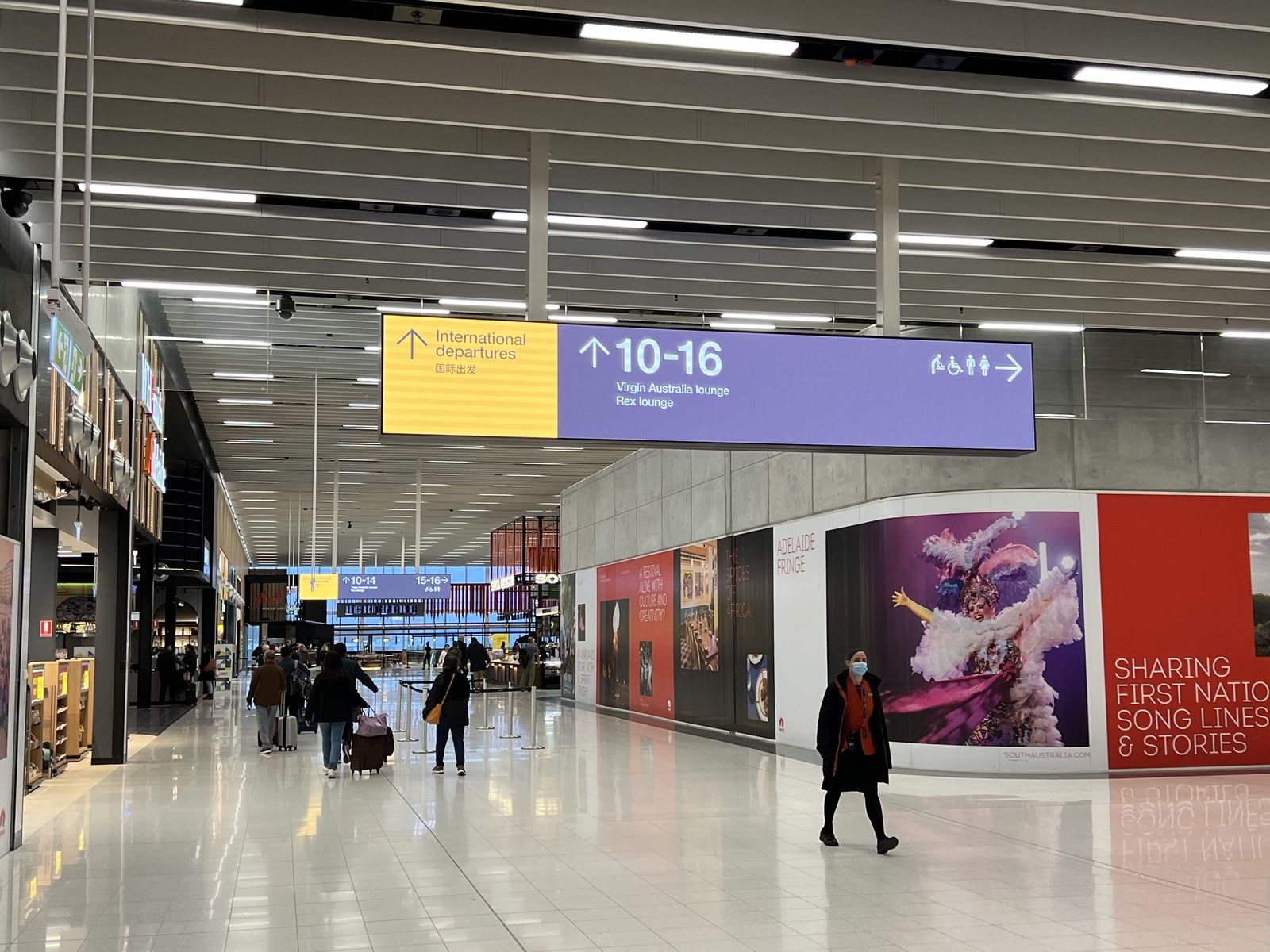
Adelaide Airport wayfinding LED displays installed by Aurora — flawless content, no module failures
Aurora · Adelaide Airport Wayfinding
"Not one module failure in 5 years of continuous service."
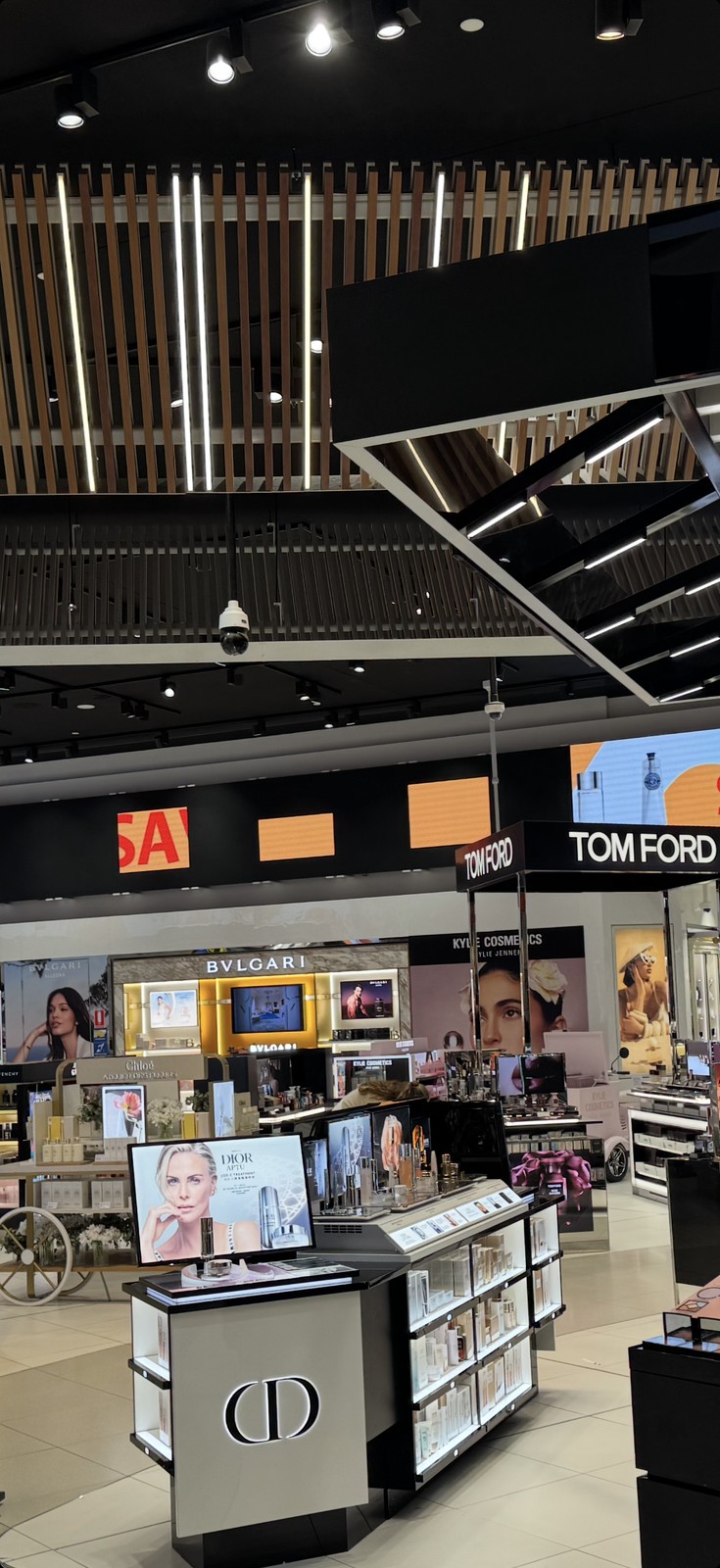
Dropped cabinets in airport LED ribbon — orange background with no content on two panels
Fig 6
Dropped cabinets in a live ribbon — chassis-to-chassis connector and data-interconnect failure: the data hand-off between cabinets has been lost at the connector while power to the affected cabinets remains intact.
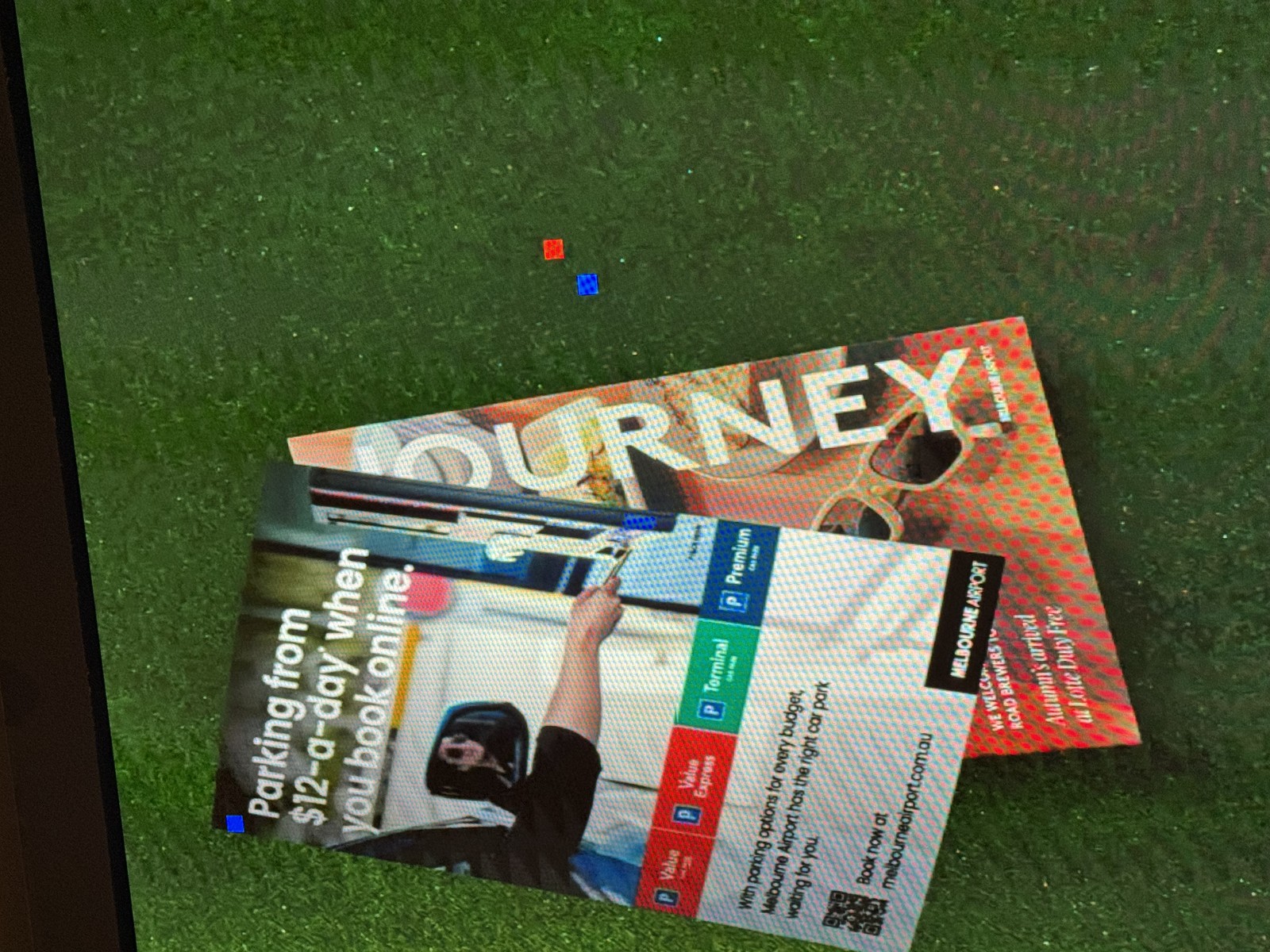
Stuck pixels on live airport LED screen — two blue clusters and one red cluster visible
Fig 8
Stuck pixels (1× red, 2× blue) caused by data-connection solder faults on the receiving card — the data signal to those pixels has been lost while power remains intact.

The photographs above were taken at a high-profile duty-free precinct in a major Australian airport — a flagship installation visible to thousands of international travellers per day. The LED ribbon was supplied by a low-cost importer. Despite the high-visibility setting, in-service failures are clearly visible to the naked eye on every viewing.

Multiple individual cabinets across the ribbon have dropped content entirely while their immediate neighbours continue to display correctly. This is the textbook signature of chassis-to-chassis interconnect failure: data hand-off from one cabinet to the next has been lost at the connector while power to the affected cabinets remains intact.

💰
The Lesson for Buyers

A low purchase price does not guarantee a low total cost of ownership. An installation of this kind, visible to the public with dropped content and stuck pixels on multiple surfaces, represents a daily brand-reputation cost that will eventually force a full replacement — at which point the original "saving" has been comprehensively erased.
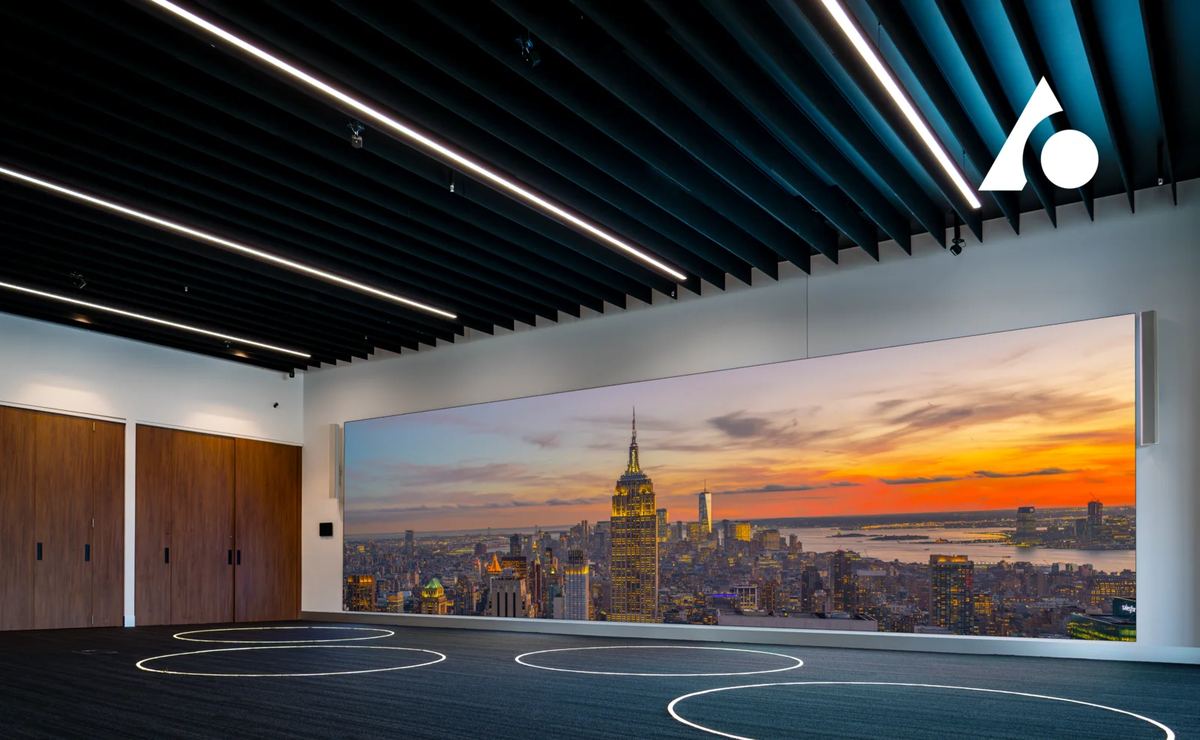
Aurora
Aurora Displays
Aurora Signage Pty Ltd
Buyer Advisory
Detailed Assessment
Ref: ADG-CS-2026-001
Detailed Assessment
Five areas of concern — in depth
Aurora Displays has observed a sharp increase in Chinese-origin LED systems being offered in Australia at prices that appear, on first inspection, to be genuinely competitive. On closer examination these are not engineered display products — they are kits of parts mounted into welded steel frame chassis and shipped as finished cabinets. The price advantage comes from removing almost everything that makes a screen safe, durable and serviceable.
Assessment 01
Electrical safety hazards

The most serious concern is access to live 240 VAC terminals. We have inspected imported cabinets in which the connector cavities at the rear of the chassis are large enough for a person to insert their fingers and make direct contact with energised mains terminals during normal service work or even routine cleaning. In our view these cavities are illegal under Australian electrical safety standards.

Compounding this, low-voltage data and high-voltage power conductors are routinely run through the same channels with no segregation. AS/NZS wiring rules require physical separation between these systems for both shock protection and electromagnetic compatibility. Imported low-cost cabinets routinely fail this requirement.


Assessment 02
Absence of mandatory Australian certification

Three certifications are required for LED display systems sold in Australia:

  • SAA approval — required for the sale of mains-connected electrical equipment in Australia.
  • RCM (Regulatory Compliance Mark) — required for electrical and electromagnetic compliance.
  • EMC test reports under AS/NZS CISPR 32 — required to demonstrate the product will not cause harmful interference and will operate correctly in its electromagnetic environment.

Without these certifications a product is not legally importable as electrical equipment, cannot be lawfully installed by a licensed electrician, and exposes the end user to insurance and liability risk in the event of a fault, fire or injury.


Assessment 03
Mechanical and environmental shortcomings

Welded steel-frame chassis built by unskilled labour cannot hold the dimensional tolerances achieved by die-cast aluminium. Across a large screen the cumulative error becomes visible as uneven seams, pixel-pitch discontinuities and twisted modules at cabinet boundaries. Service access is also compromised because modules no longer sit flush.

Modules on these systems frequently expose the rear PCB to the open atmosphere. In Australian conditions — coastal salt air, tropical humidity in northern states, and condensation cycles in venues with strong HVAC — exposed PCBs corrode quickly unless heavily epoxy-potted. Most imported low-cost modules are not potted at all.


Assessment 04
Driver IC failures and solder quality

Failures at the driver IC and data-connector layer are the most common in-service defects we see on low-cost imports. The principal modes are:

  • Driver IC open circuit — one row or column of pixels fails to drive a colour, presenting as a thin vertical or horizontal line of magenta, cyan or yellow against a uniform background.
  • Driver IC short circuit — a small block of pixels is stuck full-on in a single colour, regardless of source content, indicating a bridged output channel inside the driver.
  • Data-connector solder faults — intermittent flicker, dropped scan lines, or whole-module blackout caused by cold or bridged solder joints at HUB75-style ribbon connectors.
  • Cabinet-boundary visibility — module-to-module brightness and chromaticity mismatch visible as a faint grid under uniform colour, reflecting unbinned LEDs and the absence of factory pixel-level calibration.

Assessment 05
Workmanship and traceability

Low-cost assembly lines operate without torque control on fixings, without AOI (automated optical inspection) of SMT solder joints, without per-cabinet QC documentation, and without serialised traceability. When a fault appears in service there is no way to identify which batch a failed component came from, and no recall mechanism. This is the opposite of what a long-life capital asset should look like.

Aurora
Aurora Displays
Aurora Signage Pty Ltd
Buyer Advisory
Due Diligence & Aurora's Position
Ref: ADG-CS-2026-001
Recommended Due Diligence
What to ask your supplier — before you sign
If a supplier cannot provide satisfactory answers to all of the following questions, the product should not be installed on an Australian site.
  • SAA approval certificate — provide the certificate and approval number for this exact product model.
  • RCM compliance documentation — provide the full compliance documentation and supplier code.
  • EMC test report — under AS/NZS CISPR 32 from an NATA-accredited laboratory.
  • Terminal safety in writing — confirm AC terminations are not accessible to finger contact in any cavity, hatch or service pocket.
  • AS/NZS 3000 segregation — confirm in writing that low-voltage signal and 240 VAC power are physically segregated.
  • Module sealing confirmation — confirm rear PCBs are sealed or potted for the intended installation environment.
  • Cabinet construction documentation — confirm die-cast aluminium versus welded steel and request tolerance documentation for the array size.
  • Serialised QC records — request per-cabinet quality control records for each cabinet supplied.
  • Measured refresh and scan rate — ask for the visual refresh rate (Hz) and scan rate measured, not theoretical.
  • LED diode brand and binning — ask for the diode brand and model (e.g. Nationstar, Kinglight, San'an, Cree) and binning specification used.
  • Driver IC brand and model — generic claims such as "high-end driver" are not acceptable. Specify Macroblock MBI5153, Chipone ICND2055, etc.
  • 100% AOI confirmation — confirm automated optical inspection of all SMT solder joints on driver ICs and HUB-style data connectors.
  • Industrial-grade connector specification — confirm brand and grade (RJ45 locking bail or Neutrik etherCON minimum) and that all cable assemblies are tested.
  • Factory pixel-level calibration — request the calibration certificate. Without it, brightness and colour mismatch will be visible across the array.
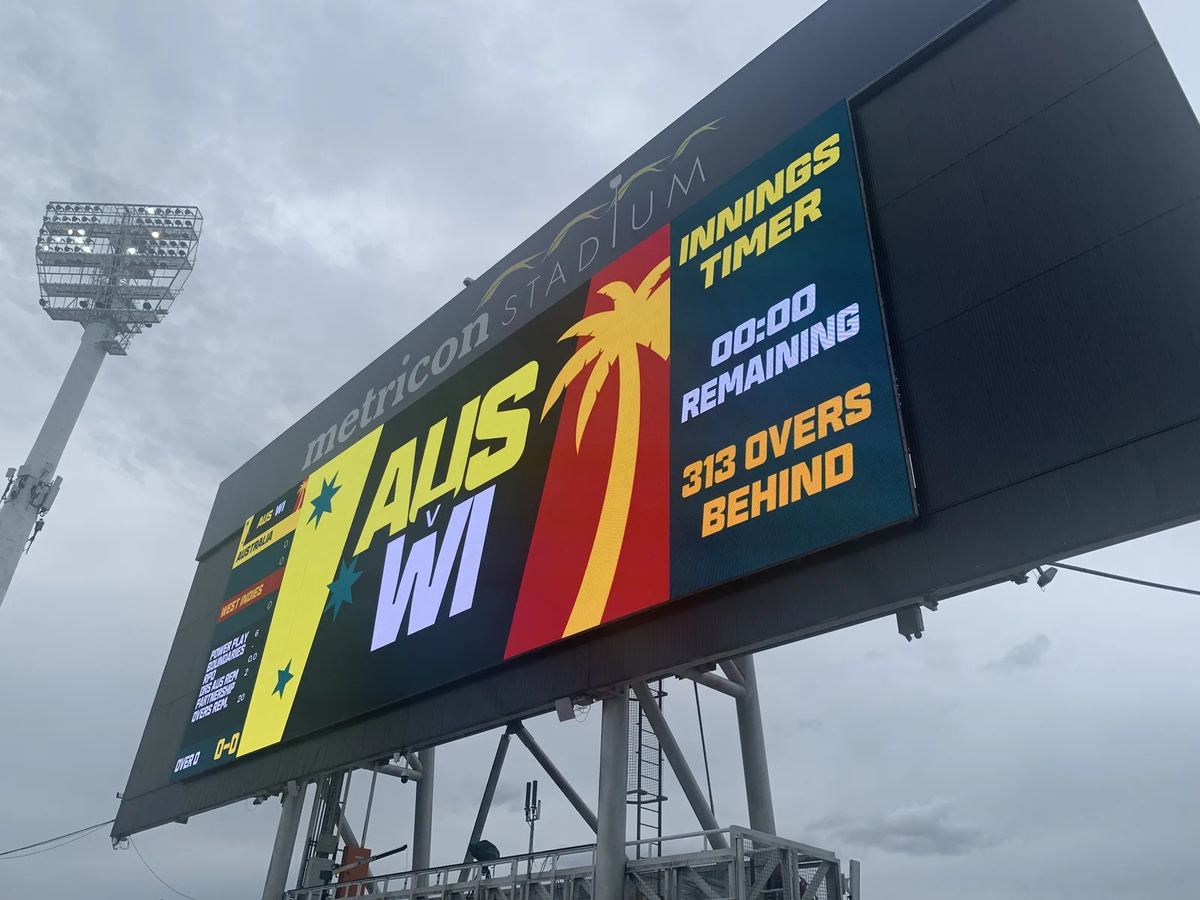
Aurora LED scoreboard at Metricon Stadium
Metricon Stadium — Certified Aurora Install
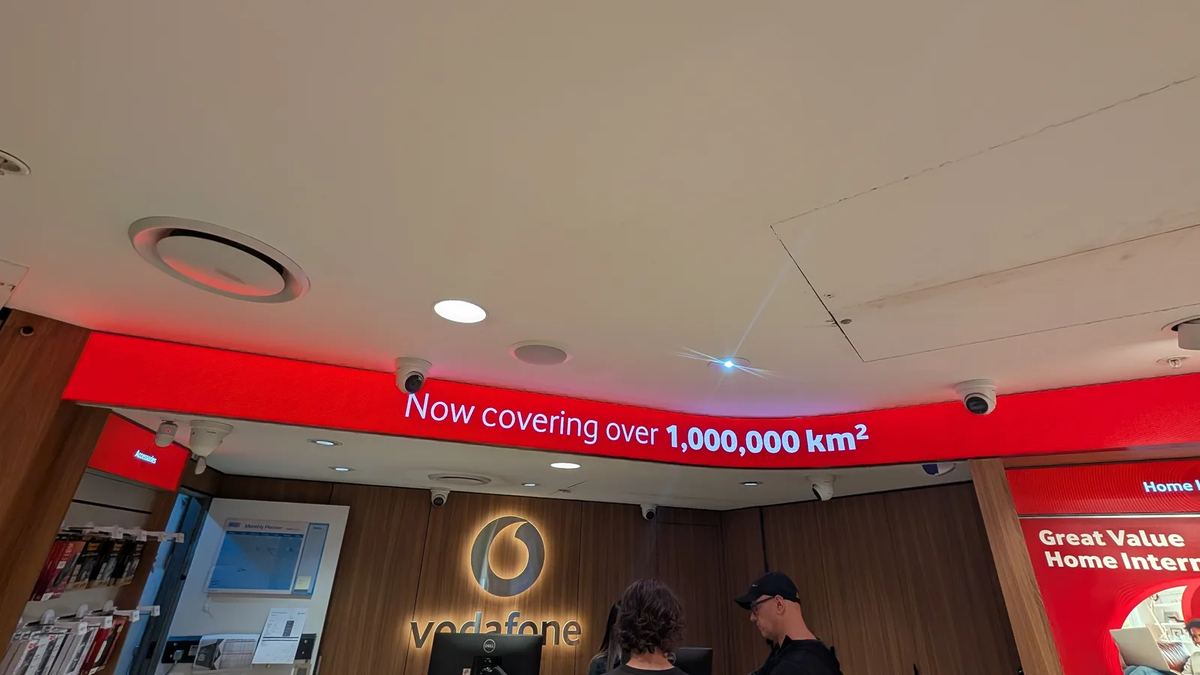
Aurora curved LED in Vodafone retail store
Vodafone Retail — Curved LED, Aurora LUX
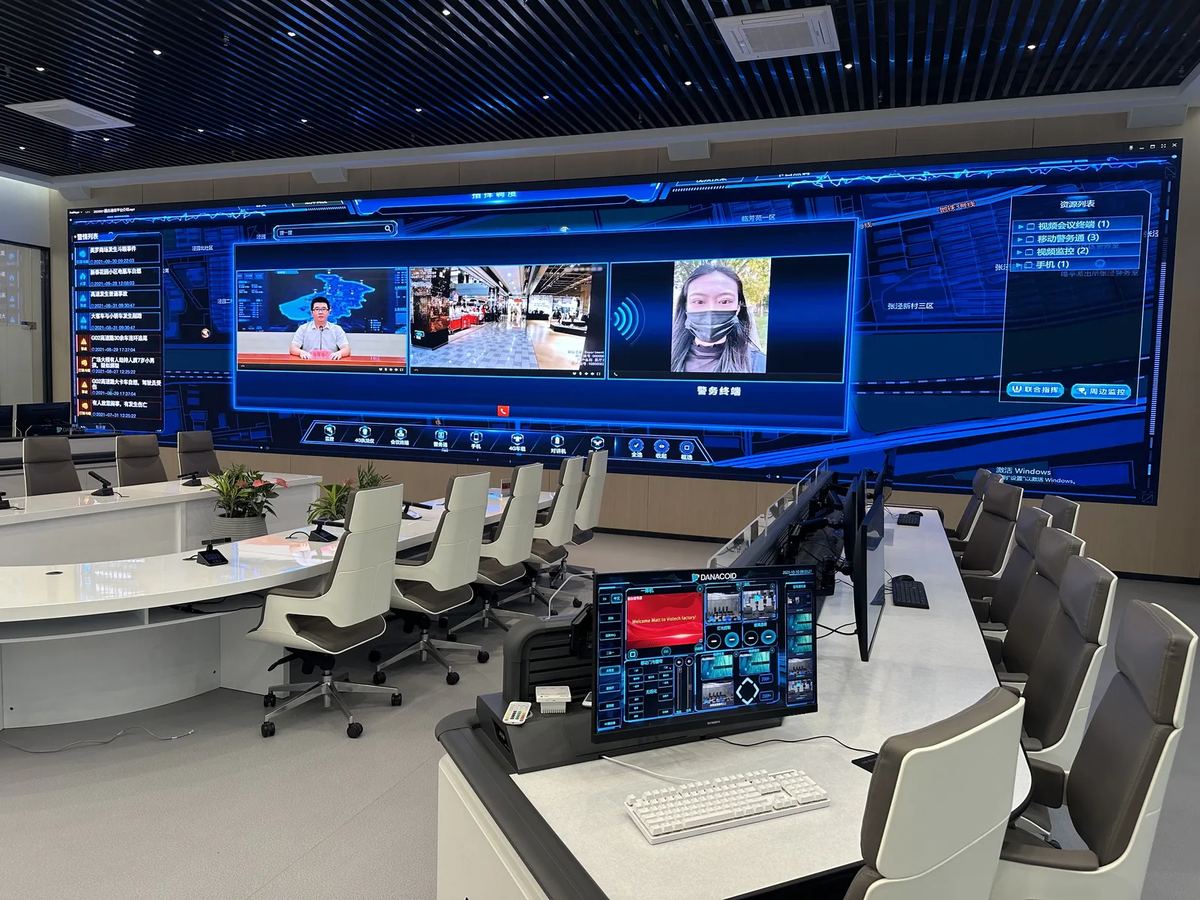
Aurora videowall in control room
Command & Control — Fine Pitch Aurora
Aurora's Position
We welcome direct comparison on every criterion.
Aurora Displays manufactures and supplies LED systems engineered to meet Australian standards from the outset. Every cabinet we deliver carries SAA, RCM and EMC certifications, is built in a die-cast aluminium chassis with full IP-rated terminations, and is supplied with per-cabinet traceability. Our pricing reflects the cost of building a product that is safe, durable, compliant and serviceable for the life of the asset.

If a competing offer cannot match Aurora on certification, terminal safety, segregation, cabinet tolerance and module sealing, the difference in price is not a saving — it is risk being transferred to the end user.
For further information
Contact your Aurora representative or request a side-by-side comparison against any competing offer.
sales@aurorasignage.com.au
aurorasignage.com.au