AU compliance for LED displays: RCM, electrical certification and what councils actually check
Australian-installed LED displays must comply with RCM marking, electrical safety and EMC standards. Here's the compliance checklist every buyer should require from their supplier.
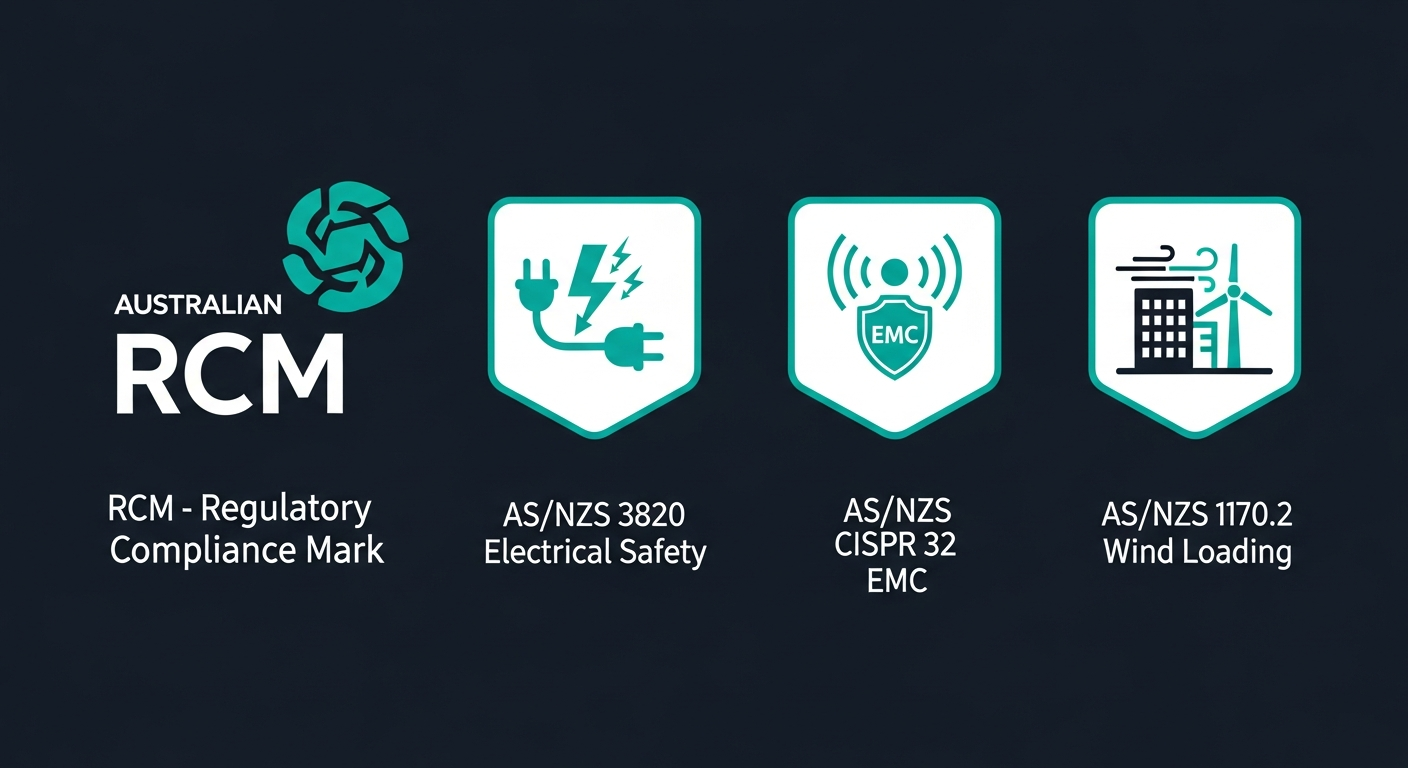
Every electrical product sold or installed in Australia is subject to a set of compliance regimes that, individually, are unsexy and easy to ignore — and which collectively are the difference between an LED install that passes a council audit and one that doesn’t. Importers who short-cut this list win on price; their customers wear the consequences when the local electrical regulator or council planning officer comes knocking.
This is a working checklist for buyers.
RCM (Regulatory Compliance Mark)
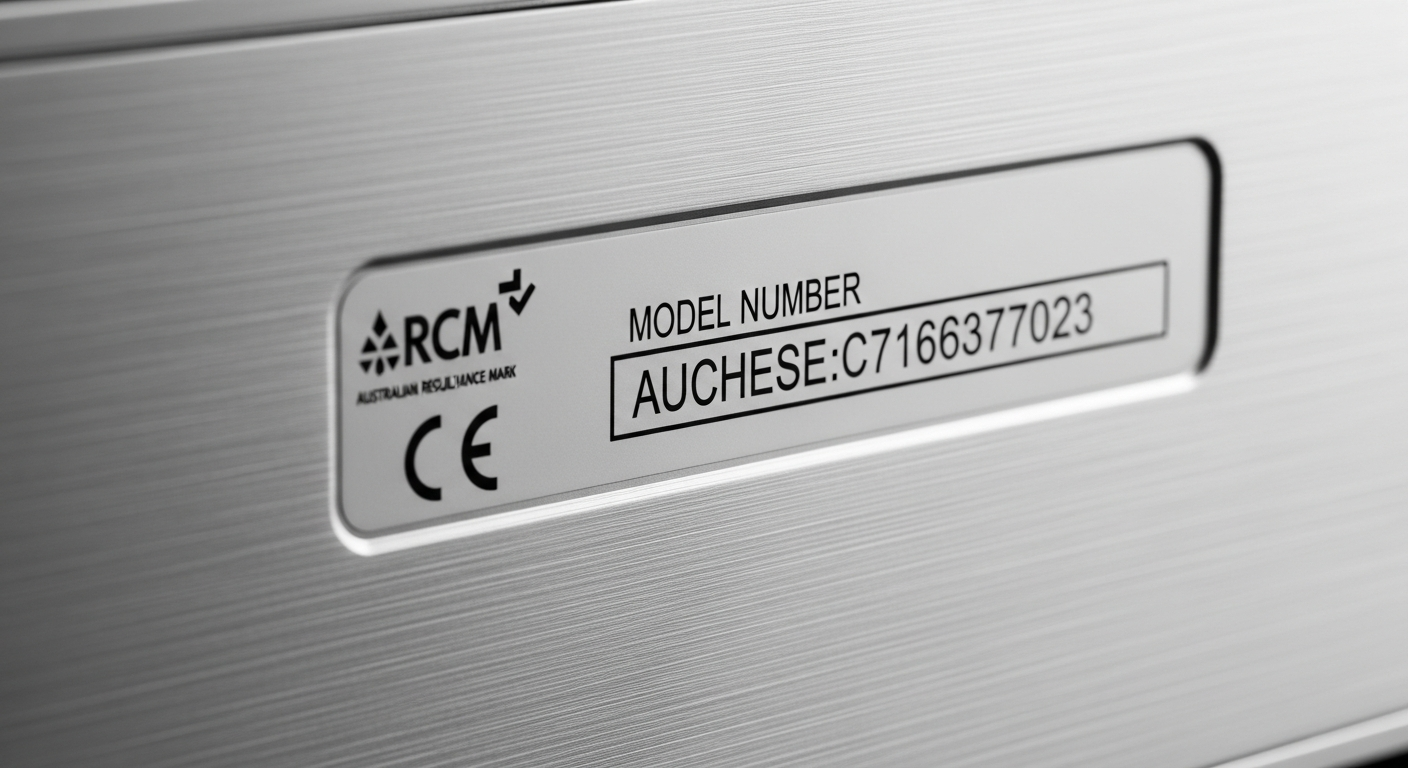
The RCM is a single mark on the product that signifies compliance with three Australian regimes simultaneously:
- Electrical safety — covered by the relevant AS/NZS standard (AS/NZS 60950 for ICT equipment, AS/NZS 62368 for new audio/video/IT equipment, depending on the product family).
- EMC (electromagnetic compatibility) — emissions per AS/NZS CISPR 32 and immunity per AS/NZS 61000.
- Telecommunications and radiocommunications — relevant only if the product contains a radio module (Wi-Fi, Bluetooth, 4G/5G), but most modern intelligent LED displays do.
The RCM is administered by the Equipment Registration System (EESS). Suppliers must register the product, hold the test reports, and file an SDoC (Supplier Declaration of Conformity).
What to check: ask your supplier for the RCM registration number for the specific cabinet model and the SDoC. “We’re RCM compliant” without a number is not the same as being RCM-marked.
Aurora’s RCM position
Aurora Signage Pty Ltd holds RCM certification across its LED display cabinet range through SAA Approvals Pty Ltd. Certificates are issued to AS/NZS 60950.1:2015 and share a common expiry cycle. Current certification documentation is available on request — contact sales@aurorasignage.com.au.
We deliberately do not publish individual certificate numbers on this page because they rotate on renewal cycles and any public number on a marketing page goes stale within months. The right path for procurement and compliance teams is to email us for the live certificate set against your specific project’s cabinet models.
Electrical safety certification (state-by-state)
Beyond the RCM, every state and territory has its own electrical safety regulator (Energy Safe Victoria, NSW Fair Trading, Energy Safety Queensland, etc.) with the power to mandate that the install itself — not just the product — is certified by a registered electrical practitioner.
For permanent fixed-wired LED displays — i.e. anything not on a 10A plug — this means:
- The wiring run, isolator, RCD/MCB protection and earthing must be installed by a licensed electrician.
- The work must carry an Electrical Safety Certificate (CCEW in NSW, COES in VIC, equivalent in other states).
- The certificate must be lodged within the regulator’s required window (typically 7–30 days).
What to check: does your supplier or installer provide the CES/CCEW/COES, or is that on you to organise?
Wind loading and structural certification
Outdoor displays must be structurally certified to AS/NZS 1170.2 (wind actions). This is non-negotiable for council planning approval and almost always required by building insurance.
The deliverable is a stamped engineering certificate from a Registered Professional Engineer of Queensland (RPEQ) or equivalent registered structural engineer in your state, covering:
- The cabinet array’s projected wind area and worst-case wind load.
- The mounting structure (frame, plinth, mast or building-side) and its capacity.
- The interface fixings between cabinet, frame and structure.
Expect to pay $2,500–6,000 for a structural certificate on a typical billboard or scoreboard. It must be re-issued if the wall is materially modified.
For more on this, see mounting and structural considerations.
Council planning approval
Outdoor commercial signage in most Australian LGAs requires either a development application or a complying-development certificate. Standard conditions councils impose:
- Maximum brightness at night (often 300–500 nit between 22:00 and 06:00).
- Auto-dim sensor mandated to enforce the night cap.
- Display dwell time (no faster than 6–10 seconds per slide; full-motion video sometimes prohibited).
- No flashing or strobing content.
- Distance from residential zones, schools and traffic-light intersections (driver-distraction concerns).
These conditions vary by LGA and by zoning. Reputable suppliers will be able to advise on the typical conditions for your council, or refer you to a planner.
Materials and waste
Two requirements that have moved from “nice-to-have” to mandatory in recent procurements:
- REACH / RoHS substance compliance, with declarations available per cabinet model. Increasingly required in government and education tenders.
- End-of-life takeback under the Australian Battery and Electrical Equipment Stewardship initiatives, especially for large-scale fleet operators.
Aurora ships every cabinet with material declarations and registers all installs with our end-of-life takeback program by default.
What to demand from your supplier
A short list to put in your RFQ:
- RCM registration number per cabinet model.
- Copy of SDoC and supporting test reports (electrical, EMC, telecom if applicable).
- Material declarations (RoHS, REACH).
- Wind-load engineering certificate (for outdoor) or willingness to provide one.
- Identity and license number of the electrical contractor performing the install.
- End-of-life takeback policy in writing.
If a supplier hesitates on any of these, that is the conversation to have before signing — not three months into a planning dispute.
Talk to us about your project’s specific compliance pathway — every state, council and project type carries different rules and we’ll walk you through the relevant ones.
Ready to move forward?
Got a project to spec?
Send us your venue, wall size and conditions — we'll come back with a tailored configuration and budget price.