Indoor vs outdoor LED: the eight specs that actually change between them
Indoor and outdoor LED walls look superficially similar but differ in eight critical ways. Confuse them and you'll either over-pay indoors or burn out a wall outdoors.
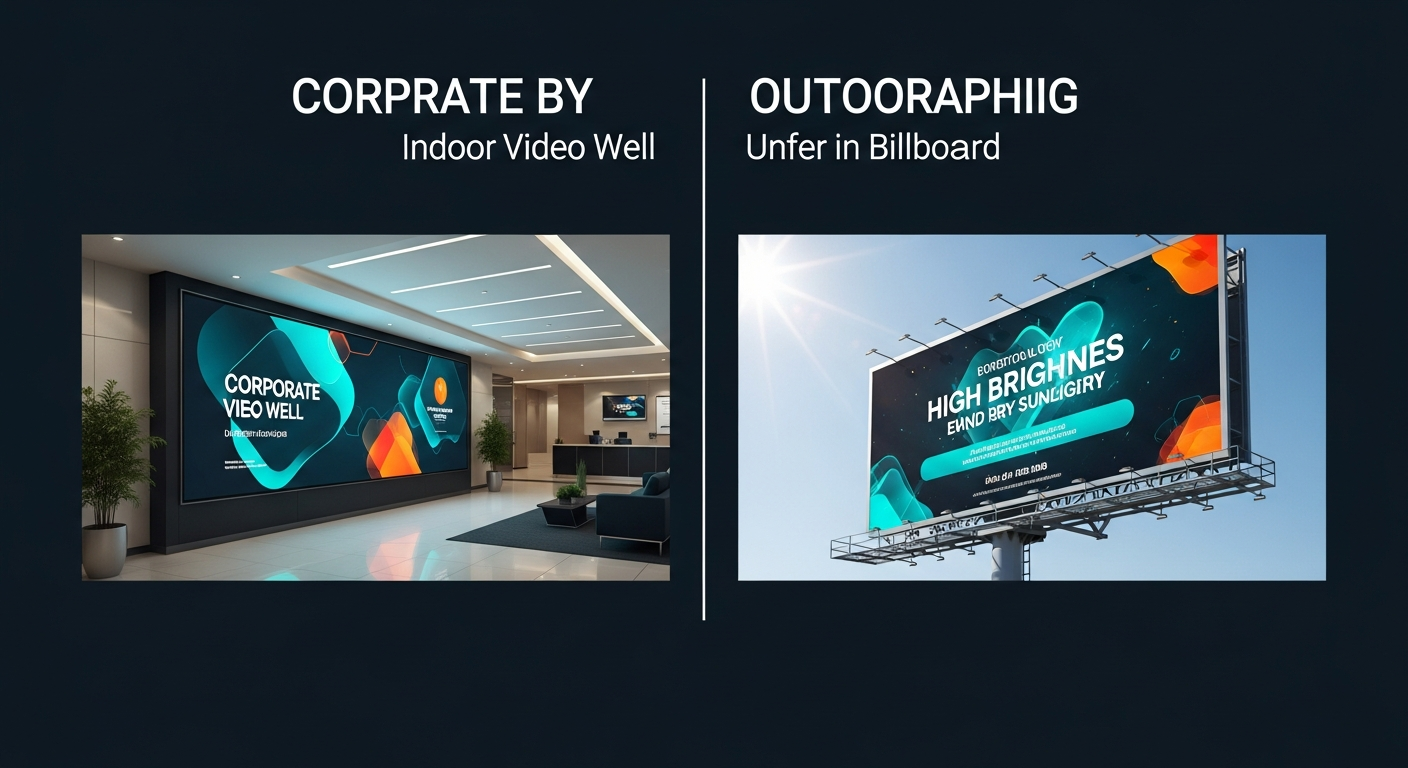
The cabinets look similar. The pixels look similar. The price-per-square-metre is in the same ballpark. But specifying an indoor LED wall when you needed outdoor — or worse, vice-versa — is a multi-year, multi-budget mistake. Here are the eight specs that actually change between indoor and outdoor LED, and what each one does to the install.
1. Brightness
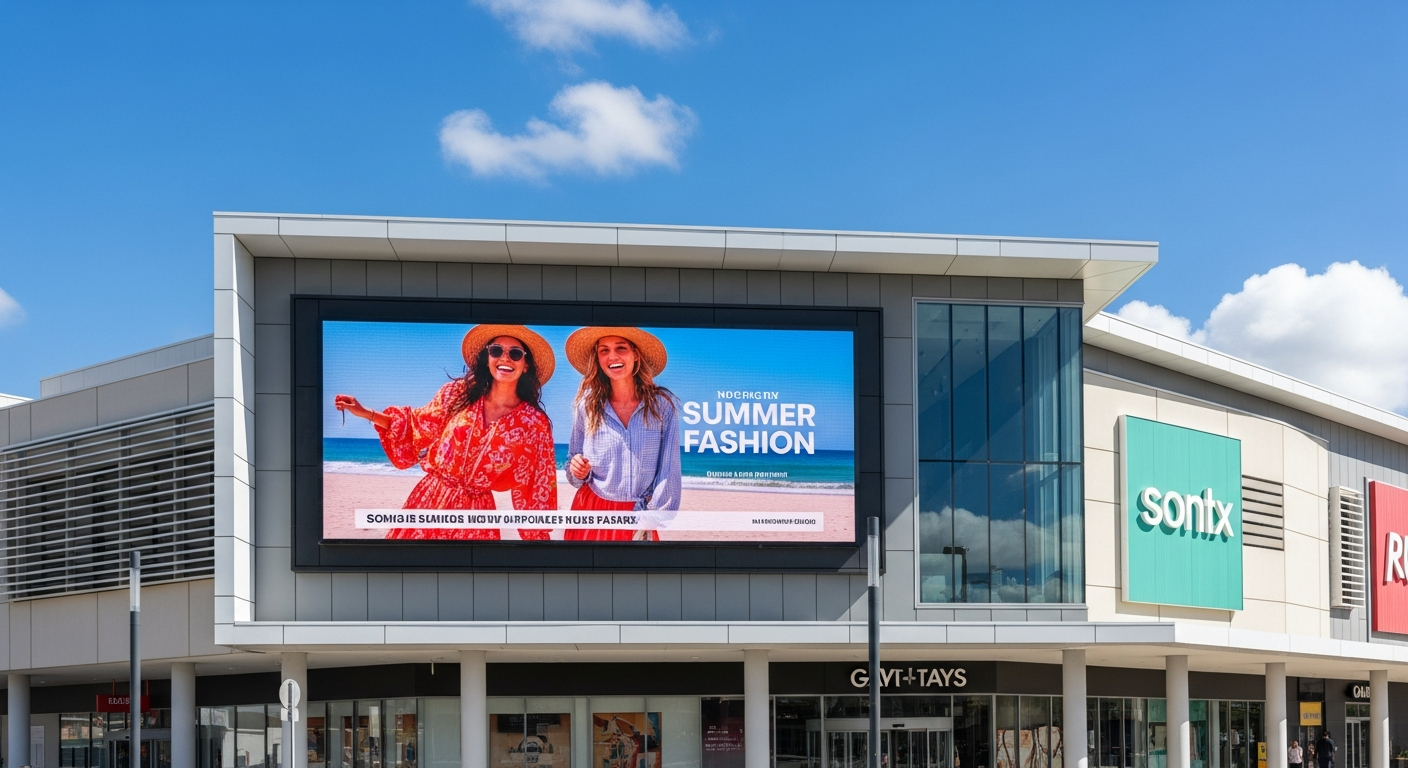
- Indoor: 600–1,500 nit typical. 400 nit is plenty for a controlled lobby; 1,200+ nit is needed only if you face windows.
- Outdoor: 5,000–8,000 nit. Anything under 4,000 nit will be unreadable in direct Australian summer sun.
If you install an indoor wall outdoors, it will be unreadable from 10 a.m. to 4 p.m. on any clear day. If you install an outdoor wall indoors and run it at peak brightness, you’ll be measuring eye discomfort and wasted power.
2. IP rating
- Indoor: Typically IP30/IP40 — dust-protected, no water resistance.
- Outdoor: IP65 minimum, both faces. See IP rating explained for the full breakdown.
An indoor cabinet exposed to wind-driven rain will short out within months. An outdoor cabinet works fine indoors but is roughly 20–30% more expensive than necessary.
3. Auto-brightness control
- Indoor: Static or scheduled brightness. Lux sensor optional.
- Outdoor: Lux-sensor-driven brightness, dynamic from 200 nit (overnight) to 6,500 nit (midday) is mandatory. Without it, you waste enormous power and risk eye-discomfort complaints from neighbours.
Many councils require dynamic brightness on outdoor commercial signage as a planning condition.
4. Cabinet sealing and serviceability
- Indoor: Front- or rear-service possible. Cabinets can be open-back for maximum airflow.
- Outdoor: Sealed both faces. Must be front-serviceable (the back is often inaccessible once mounted to a structure).
For an outdoor install where the back of the cabinet is hard against a building, you absolutely cannot tolerate a rear-service-only cabinet — even though it’s cheaper.
5. Thermal management
- Indoor: Convection cooling, occasional small fans. Operating temperature window: 0–40 °C ambient.
- Outdoor: Forced-air or sealed-loop cooling. Operating temperature window: -10 to 50 °C ambient with derating to 45 °C in some southern AU climates.
A wall in a Townsville scoreboard housing can hit 65 °C internal in February. The PSU and driver IC selection has to account for that.
6. Surface treatment
- Indoor: Standard powder-coat, glossy or matt face mask.
- Outdoor: UV-stable powder-coat over hot-dip galvanised steel; salt-air variants in 316 stainless. Front mask matt to reduce glare and bird-collision risk.
UV degradation of indoor cabinet plastics in outdoor conditions is brutal — chalking, cracking and colour shift are visible inside 18 months.
7. Surge and EMC protection
- Indoor: Standard PSU, basic surge protection.
- Outdoor: Type-2 surge protection on all power feeds, signal-line ESD diodes, full AS/NZS CISPR 32 emissions and AS/NZS 61000 immunity compliance.
A nearby lightning strike will fry an indoor wall installed outdoors before the operator can blink. Outdoor cabinets routinely survive direct surges that would destroy indoor electronics.
8. Cost per m² — and why “outdoor is more expensive” can mislead
- Indoor (P2.5): $2,500–4,500/m².
- Outdoor (P5): $1,800–3,200/m².
Outdoor is often cheaper per square metre at equivalent buyer-perceived quality, because the pitches are coarser. The mistake is comparing P2.5 indoor cost to P2.5 outdoor cost — at P2.5 outdoor (which exists but is rare), you’re paying $5,500–8,000/m² because the IP65 sealing, brightness, thermal and surge protection all stack on top of a fine-pitch panel.
For most outdoor applications you don’t need P2.5. Pick the right pitch for your viewing distance (see the buying guide) and outdoor LED is no more expensive than indoor.
The decision flow
- Will the wall ever be exposed to weather? If yes → outdoor cabinet, IP65 both faces, no exceptions.
- Will it face windows or be lit by direct sun? If yes → 1,200+ nit indoor or full outdoor cabinet.
- Is it under an awning but outdoors? → Outdoor cabinet, IP54 rear acceptable, IP65 front.
- Is it on a moving rig (ute, trailer, marine)? → Outdoor cabinet with vibration-tolerant connectors.
- Is it in a humid plant room (pool deck, food-prep)? → Outdoor cabinet plus conformal-coated electronics.
If any of those answers is yes, talk to us about the GSR range — its weather-rated cabinets are built for exactly those conditions. If they’re all no, the LUX and VSPEC ranges will get the job done at lower cost.
Ready to move forward?
Got a project to spec?
Send us your venue, wall size and conditions — we'll come back with a tailored configuration and budget price.