IP rating explained: what IP54, IP65 and IP67 actually mean for LED displays
IP ratings are quoted on every outdoor LED spec sheet — and quietly misused on half of them. Here's what each digit actually means, and the rating you really need for AU conditions.
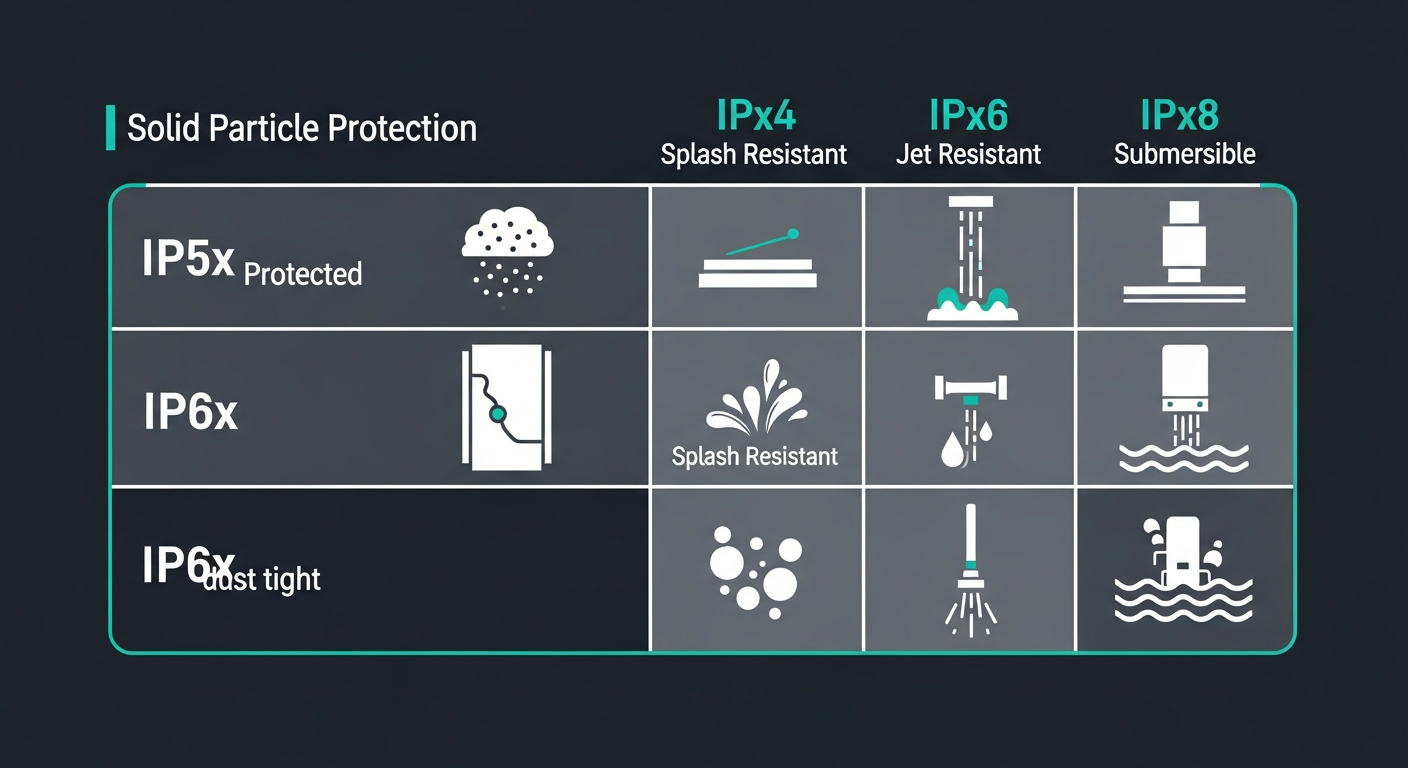
The IP rating on an LED cabinet is a four-character claim about how well its enclosure resists solid objects (first digit) and water (second digit). It is governed by the international standard IEC 60529 and adopted in Australia as AS 60529. Every reputable LED manufacturer prints an IP rating on its outdoor data sheets.
The problem is what those numbers actually mean — and the gap between the marketing claim and what the cabinet actually survives in service.
The two digits, decoded
First digit — solid ingress (0–6):
| Digit | Protection against |
|---|---|
| 0 | No protection |
| 1 | > 50 mm objects (back of hand) |
| 2 | > 12.5 mm objects (finger) |
| 3 | > 2.5 mm objects (tools, thick wires) |
| 4 | > 1 mm objects (most wires, screws) |
| 5 | Dust-protected (limited ingress, no harmful deposit) |
| 6 | Dust-tight (no ingress at all) |
Second digit — water ingress (0–9K):
| Digit | Protection against |
|---|---|
| 0 | None |
| 1 | Vertical drips |
| 2 | Drips at up to 15° tilt |
| 3 | Sprays at up to 60° from vertical |
| 4 | Splashes from any direction |
| 5 | Low-pressure jets (12.5 L/min, 6.3 mm nozzle, 3 m) |
| 6 | Powerful jets (100 L/min, 12.5 mm nozzle, 3 m) |
| 7 | Temporary immersion to 1 m for 30 min |
| 8 | Continuous immersion at manufacturer-specified depth |
| 9K | High-pressure, high-temperature jets (used in food-processing wash-down) |
So IP65 = dust-tight + low-pressure water-jet resistant. IP67 = dust-tight + temporary immersion. IP54 = dust-protected + splash-resistant.
What the AU climate actually demands
The IP rating you need is driven by where the cabinet sits and what hits its faces.
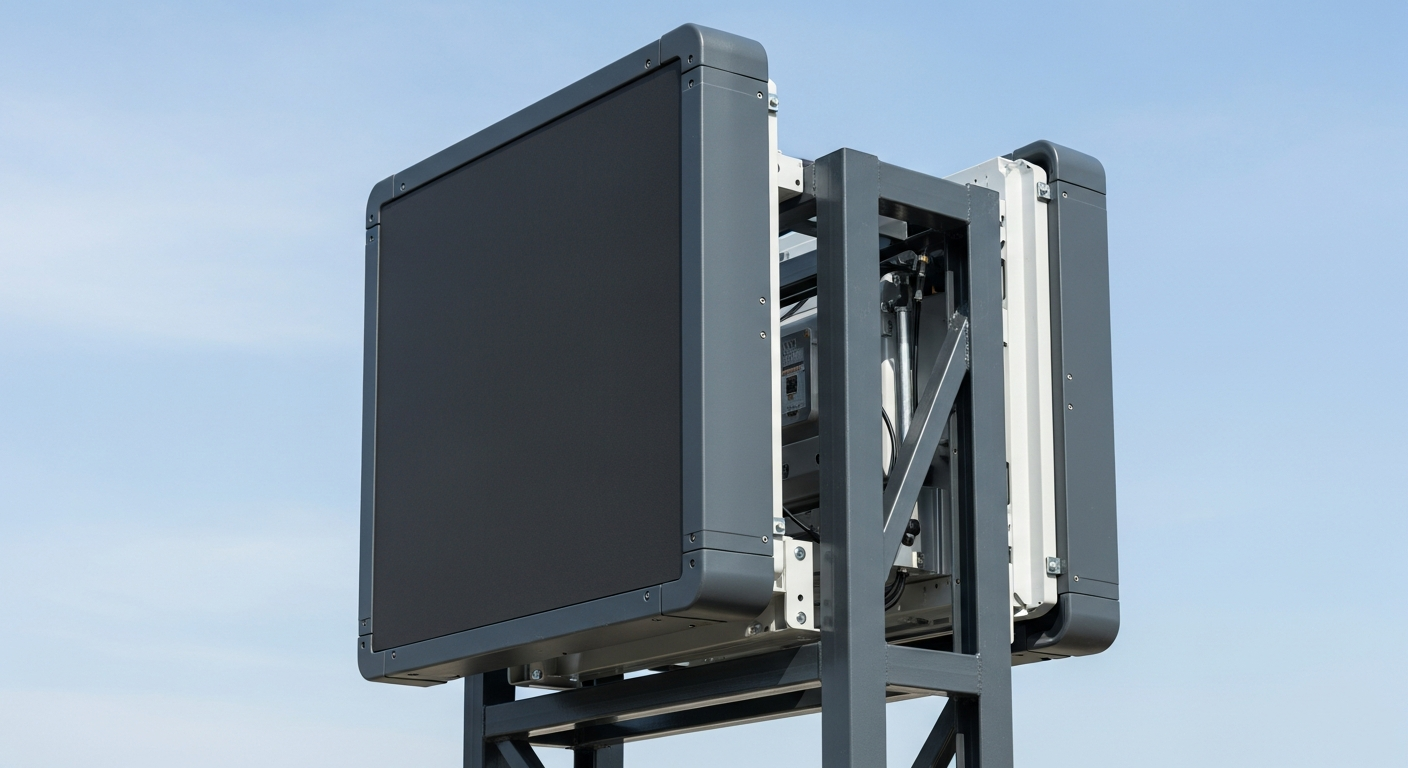
Outdoor, fully exposed front and back (most stadium ribbons, billboards, street furniture): IP65 minimum on both faces. Anything less and wind-driven rain — common across NSW, QLD and TAS storms — will eventually find a way in.
Outdoor under awning, eaves or covered walkway: IP54 on the rear face is acceptable; the front still needs IP65 because lateral rain still drives onto front-facing surfaces.
Coastal salt-air zones (within 5 km of unprotected coast): IP65 is necessary but not sufficient. The bigger threat is corrosion of fasteners, chassis and PSU pots. Specify hot-dip galvanised steel or 316 stainless fasteners, conformal-coated electronics and IP65 with sealed cable entry.
Wash-down environments (food-processing, vehicle wash bays, public-pool plant rooms): IP66 minimum, often IP69K. These are unusual deployments for LED but they do happen.
Industrial yards with airborne contaminant (dust, chemical mist): IP66 front and rear regardless of weather exposure. You’re protecting against the contaminant, not the rain.
The dual-rated trap
Many cabinet vendors quote a single IP rating that applies only to one face. A common spec is “IP65 front, IP54 rear.” Read the data sheet carefully — that cabinet is not safe for an exposed back-of-house location, even though “IP65” appears prominently on the marketing page.
Aurora’s GSR cabinets are dual-rated IP65 front and rear as standard, with an optional IP66 upgrade pack for rear-exposed perimeter and street-furniture deployments.
What testing actually proves
The IP test that earns the rating is performed once, on a sample, in a controlled lab. It does not guarantee:
- Long-term seal performance after thermal cycling (gaskets compress and harden).
- Performance after field service (every time a module is swapped, the seal is broken and re-made).
- UV resistance of polymer seals.
- Performance under sustained water (an IP65 unit may pass a 3-minute jet test but fail a 4-hour wind-driven storm).
Reputable manufacturers re-test field-returned units for seal integrity and replace gasket sets on every front-service intervention. Cheaper vendors do neither, which is why IP65-rated outdoor walls from grey-market suppliers fail at 3–5 years instead of 8–10.
What to ask suppliers
Before signing an outdoor LED contract, get written confirmation of:
- The IP rating on both faces (not just the front).
- Whether the rating applies as-shipped or after a field-service swap.
- The gasket material and expected re-seal interval (most quality cabinets use a closed-cell silicone or EPDM with a 5-year baseline).
- Whether the rating includes the cable-entry glands (cable entries are a common ingress point if specified in haste).
Aurora’s outdoor cabinets ship with a written IP test certificate per production batch and a factory-approved field-service procedure that preserves the as-shipped rating. Talk to us about your site conditions before specifying a cheaper rating than the environment demands.
Ready to move forward?
Got a project to spec?
Send us your venue, wall size and conditions — we'll come back with a tailored configuration and budget price.